What is the Employment Security Fund for Persons with Disabilities in China?
When I first started advising foreign-invested enterprises (FIEs) on their China market entry back in 2012, one of the most frequently overlooked line items in their annual budget was a certain "social responsibility levy." Clients would often stare at the tax filing form and ask, "Teacher Liu, what is this 'Can Jin'? Is it a tax? Can we avoid it?" Today, I want to demystify this key obligation – the Employment Security Fund for Persons with Disabilities (also known as the Disability Employment Security Fund, or "Canjiren Jiuye Baozhang Jin"). It's not a tax in the strictest sense, but a government-regulated fund designed to incentivize employers to hire persons with disabilities, or failing that, to contribute to public programs that support them.
The background here is pragmatic. China has roughly 85 million persons with disabilities, and historically, their labor participation rate lagged far behind the national average. The State Council implemented the *Regulations on the Employment of Persons with Disabilities* and the subsequent *Measures for the Collection and Use of the Employment Security Fund* to create a dual-track system: hire qualified disabled workers (reaching a quota of 1.5% of your total headcount), or pay a financial contribution. For foreign-invested enterprises, this is not merely a compliance checkbox. The calculation methodology, exemption thresholds, and local enforcement vary significantly across provinces – from Beijing's strict digital audits to Shanghai's nuanced social insurance reconciliation. Let me walk you through the nuts and bolts, because in my 14 years of handling company registration and annual filings, I've seen too many CFOs sweat over a surprise assessment letter from the local disabled persons' federation (DPF).
基金的法律定性与征收依据
First off, let's get the legal foundation straight. The Employment Security Fund is a legally mandated fund, not a discretionary charity donation. It is established under the *Law on the Protection of Persons with Disabilities* (revised 2018) and the State Council's *Regulations on the Employment of Persons with Disabilities* (Order No. 488). According to Article 33 of the Law, the state implements an employment security system for persons with disabilities. Employers whose employment of disabled persons fails to reach the government-stipulated proportion must pay the fund. The "stipulated proportion" is set at no less than 1.5% of the total number of employees, though some provinces – like Jiangsu – have pushed this to 1.5% for most industries and 2% for specific sectors. The fund is collected by the local tax authorities (in most regions) on behalf of the Disabled Persons' Federation, which creates an interesting administrative split: the tax bureau acts as the collection agent, but the DPF sets the rules and conducts the substantive audit.
Now, here's a critical nuance that trips up many new FIEs. The calculation of "total employees" is not simply your headcount on paper. It includes all employees who have signed labor contracts or who are dispatched through labor dispatch agencies, and it counts *full-time* and *part-time* workers, but excludes those on statutory retirement and those already receiving pension benefits. Also, the number of disabled employees that count toward your quota must meet strict criteria: they must hold a valid *Disabled Person's Certificate*, have signed a labor contract of at least one year, *and* have actually paid social insurance (specifically, pension and medical) for at least 6 months in the current year. I remember a case in 2019 where a German manufacturing client in Suzhou thought they had filled the quota by hiring three disabled workers through a dispatch agency. On audit, the DPF disqualified all three because the dispatch agency had not remitted their social insurance premiums for the first two months – the entire quota was null, and the client faced a back payment of over RMB 400,000, plus a late fee. That hurt, and it was entirely avoidable.
The collection rate, or the amount you owe, is calculated as: (Employer's total number of employees × 1.5% – number of disabled employees actually employed) × the average annual salary of the employer's employees in the previous year. The "average annual salary" is itself a source of confusion. It is not the minimum wage, but the average of your total wage bill (including bonuses, allowances, and overtime) divided by your average headcount, capped locally – for instance, Beijing caps the calculation base at 3 times the city's average social wage, while some smaller cities do not. So, for a high-paying tech company in Shanghai, the per-head cost of non-compliance can easily exceed RMB 20,000 per year, making the fund a real financial consideration, not just a tick-box.
计算基数的地域差异与实务陷阱
Let me share a quick personal war story. Around 2017, I was helping a US-based pharmaceutical company set up its China branch in Tianjin. We initially budgeted the disability fund based on our headcount of 120 employees and the national average salary. But Tianjin's DPF at that time had a local "enhancement policy" that required a higher proportion (1.7%) for companies in "high-technology service" categories. The client didn't qualify for any exemption, and they weren't hiring any disabled workers. The local tax bureau, acting as the collector, sent us a pre-assessment notice that was nearly 35% higher than our estimate. Why? Because they used the *average salary of the entire Tianjin workforce* as the base, not the company's actual average salary, which was lower. That was a real eye-opener. The lesson? The provincial-level implementation rules are the only truth you can rely on. You cannot assume that the national regulations map neatly onto your local experience.
Moreover, there's a subtle trap regarding "dispatched labor." Under the current interpretation, if you use labor dispatch to meet your headcount, those dispatched workers are included in *your* total employee count for the ratio calculation. However, the disabled workers provided by the dispatch agency are *not* counted as your own unless they are directly managed by you and paid social insurance by you. In practice, most dispatch agencies operate on a separate quota system, so you're often double-paying – your headcount is inflated, and you can't claim the offset. This is a common grievance among FIE manufacturing companies that rely heavily on contract workers. For example, a Japanese electronics company in Huizhou with 1,000 headcount (300 of which were dispatched) could not count the 5 disabled workers employed by the dispatch agency. They ended up paying the full fund for 1,000 employees, even though, practically, they had "supported" disabled employment indirectly. I advise clients to either negotiate with the dispatch agency to have those workers sign direct contracts, or to budget for the full levy from day one.
Another trap is the timing of the calculation. The fund is calculated based on the *previous year’s* average headcount and salary, but you are required to declare and pay *within* the current year (usually between June and September, depending on the province). For a newly established company, the first year might be exempt if you opened after a certain date (e.g., after December 31st), but the exemption rules differ. In Beijing, a newly established company with less than 24 months of operation may enjoy a 50% reduction if their headcount is below a threshold. Yet, some relocating FIEs miss this exemption because they register the new entity in one quarter but start operations in another, leading to a mismatch between the registration date and the employment start date. I've had to write multiple negotiation letters to DPFs to argue for a fair calc base. Frankly, it's exhausting, but it reinforces the value of doing a pre-filing audit before the annual declaration window opens.
残疾人职工的认定与用工细节
So, whom exactly can you count as a "disabled employee" to offset the fund? This is where detail really matters. The individual must hold a valid *People's Republic of China Disabled Person's Certificate*, issued by the county-level Disabled Persons' Federation. This certificate is based on a medical assessment, and it includes categories such as visual, hearing, speech, physical, intellectual, mental, and multiple disabilities. Three practical details often catch employers off guard: First, the disability must be *confirmed* before or during the employment period – a certificate issued retroactively after the audit date usually won't work. Second, the employee must be actually working, not just "on the books." Some DPFs conduct site visits or use social insurance payment records as a proxy for actual work. If you list a disabled employee who is on long-term sick leave without pay, they generally cannot be counted. Third, the employment must be "stable," meaning a labor contract of at least one year and six consecutive months of social insurance contributions. I recall a 2021 case in Shenzhen where an FIE hired a disabled individual with a doctorate degree, but that person was working remotely from Sichuan. The Shenzhen DPF rejected the quota because the employee was not registered as a Shenzhen resident, and the social insurance was paid in Sichuan. The local rule required that the social insurance contributions be made to the *same* local pool as the employer. This regional restriction is critical – you cannot offshore your disability quota to cheaper insurance pools.
From a human resources perspective, hiring persons with disabilities is not just a financial offset; it's a compliance commitment. If you hire a person with a mental disability (e.g., mild intellectual disability), you must provide appropriate workplace accommodations, and you cannot terminate them without going through a rigorous assessment by the local labor dispute arbitration committee. I've seen well-meaning FIEs in Guangzhou hire a team of physically disabled workers for assembly line jobs, only to face friction with their labor union over shift scheduling. The fund reduction was substantial, but the operational coordination cost was high. My advice is to integrate disability hiring into your broader ESG (Environmental, Social, and Governance) strategy, not just as a tax-saving trick. The DPF appreciates a structured approach, and they are more likely to be lenient in a borderline audit if they see you have a genuine, documented inclusion policy.
Let me also clarify a misconception: the fund is not always a "penalty." If your company *exceeds* the 1.5% quota, you are not entitled to a refund, but you can receive a *reward* or *subsidy* from the local government in some provinces, such as a one-time employment subsidy for each additional disabled worker hired. However, this incentive is rarely advertised and is subject to local budget availability. In our experience, companies that proactively hire 2% or more disabled workers often receive a certificate of social responsibility, which can be a soft marketing asset. But do not count on this reward – it's discretionary. The core purpose of the fund remains: to compel action, not to reward overachievement.
减免与免征的适用条件
Can you ever legally reduce or skip the payment? Yes, but the conditions are narrow and strictly construed. The primary exemption is for employers with a total headcount of 30 or fewer employees, who are fully exempt from the fund. This is a huge relief for small foreign representative offices or branch offices. However, the definition of "total employees" includes all employees across the entire legal entity, not per branch. So if you have one small office in Chengdu and a parent entity with 100 employees in Beijing, the Chengdu office cannot claim the exemption – the count is done at the legal entity level. I had a client in 2018 who set up a tiny liaison office in Chongqing under a wholly foreign-owned enterprise that had 50 employees in Shanghai. They tried to claim the 30-person exemption for the Chongqing office, and the DPF rightfully rejected it, assessing the entire group. That was a classic "entity vs. branch" mistake.
Another possible reduction applies to companies that are severely loss-making or facing bankruptcy, but this is not a formal exemption. In practice, you can apply for a *deferral* or *partial waiver* if you can demonstrate financial distress, but this requires an application to the local finance bureau and DPF jointly, and the success rate is low. We've successfully assisted a logistics company in Kunshan to defer a portion of their fund for six months due to a demonstrated 30% revenue drop during the pandemic, but we had to present audited financials and a restructuring plan. The DPF is not in the business of letting companies off the hook easily. Also, be aware of the statute of limitations. The tax authorities have up to 3 years to retroactively assess unpaid funds, but a deliberate false declaration may extend that to 5 years. I always advise clients to keep all calculations, social insurance payment records, and disabled employee certificates for at least 7 years.
There is also a peculiar "new business" exemption. Companies registered in the current year are not required to pay the fund in the year of establishment, as there is no "previous year's" salary data. But this one-year grace period does not apply to existing companies that simply relocate to a new city. If your legal entity moves from Hangzhou to Ningbo, the 30-person exemption may be recalculated based on the new location's headcount, but the existing data from Hangzhou is still counted. So, the grace period is actually a "first operational year" concept, not a "new registration date" concept. The DPF looks at when the company first declared employees for social insurance. If you set up a shell company in January but did not hire anyone until September, the calculation base for the fund is zero for that year, but the exemption is not automatic – you still have to file a "zero declaration" to avoid penalties for non-filing.
征收流程与申报时间节点
The administrative process for paying the fund is deceptively simple but operationally demanding. Generally, the annual declaration window opens in June and must be completed by the end of September (the exact dates vary by province; for example, Shanghai uses 2024.05.15 to 2024.08.15, while Guangdong uses 2024.06.01 to 2024.09.30). You must log into the local DPF's online service platform or the tax bureau's e-filing system, enter your previous year's average headcount, average salary, and list any disabled employees with their certificate numbers. The system then calculates the liability automatically. However, the system does not validate your underlying data – it only checks whether you have entered numbers. The DPF will cross-verify after the filing with the social insurance bureau and the tax bureau. For example, if you enter an average salary of RMB 8,000 per month, but your corporate income tax returns show an average of RMB 12,000, you'll receive an inquiry letter.
In my practice, I've seen a common "data reconciliation" problem for FIEs that operate with intercompany seconded expatriates. Expatriates are generally *not* counted in the total employee headcount for this fund if they are not covered under China's social insurance system (since they are on home-country pension schemes). But if your Chinese subsidiary provides a "top-up" salary to an expatriate, and that is recorded as wages, the tax bureau may include it in your wage bill, thereby inflating your average salary base. The DPF's calculation base is "total wages paid to employees," which is typically aligned with the financial accounting wage. To avoid discrepancies, I advise clients to clearly separate expatriate allowances into "reimbursement for expenses" (which is non-taxable) rather than "salary" (which increases the base). This is a legitimate tax planning point, but it must be documented consistently across your payroll and social insurance filings.
Another practical point is the receipt of the payment. Once calculated, the fund is payable to the local "Non-Tax Revenue Collection Account" managed by the tax bureau, but you must use a specific "payment notice" number generated by the DPF system. If you pay on time, you get a formal "Payment Certificate" which is necessary for your annual audit and for applying for certain enterprise income tax deductions? Wait – I need to clarify: the Employment Security Fund is *not* deductible for corporate income tax in the traditional sense? Actually, yes, it is deductible as a "management expense" under the Enterprise Income Tax Law (for the portion calculated according to regulations). But the penalty for late payment is *not* deductible. Many CFOs mistakenly believe the late fee is also deductible. It is not – the IRS-equivalent (SAT) will add it back to your taxable income. This is a subtle area where professional advice matters.
违规后果与实务应对策略
Ignoring the fund is not an option. The consequences escalate quickly. First, the local DPF will send a written *Collection Notice* with a 10-day grace period. If you still fail to pay, the tax bureau can impose a daily late fee of 0.05% of the unpaid amount. After 60 days of non-payment, the DPF may apply to the local court for a compulsory enforcement order, which can seize your bank accounts. More critically for FIEs, the non-payment status is often linked to the city's social credit system, which may affect your eligibility for certain government subsidies, export tax rebates (in some zones), or even the simplicity of visa issuance for your foreign staff. In 2022, a US manufacturing plant in wuxi faced a delay in obtaining an expansion permit because they had an outstanding disability fund liability of RMB 230,000 that was classified as a "bad credit record." The local investment promotion bureau actually mediated, but the company had to negotiate a payment plan to unlock the permit. That's a direct business cost that goes far beyond the fund amount.
So, what is my practical advice, based on a decade-plus of handling these cases? First, do a monthly or quarterly internal review of your headcount and disability hiring. Don't wait for the annual window. Use the same social insurance declaration software to monitor your proportion. Second, if you are planning to reduce your workforce, be careful – a layoff that reduces your headcount from 100 to 40 might actually *increase* your liability per person, since the 30-person exemption only applies below 30. Third, maintain a dedicated folder for each disabled employee, including their certificate, labor contract, social insurance payment records, and attendance logs. This is the golden rule: the DPF audit is about evidence, not intention. Fourth, if you are in a high-cost city (e.g., Beijing), consider partnering with a local social enterprise that provides training and placement for disabled workers in roles such as data entry, packaging, or cleaning. This is often more cost-effective than paying the high fund based on a high average salary.
Let me also mention the emerging digitalization trend. Many cities now use "pre-charge" systems – the tax bureau will proactively pre-fill the fund amount based on your prior year data, and you have to "confirm" or "object" within the deadline. This is convenient, but it shifts the burden of proof onto you. If you object, you must provide alternative data within 15 days. So, around May of each year, I send a reminder to all my FIE clients: "Check your estimated pre-filled disability fund form before June 1, not after." Last year, a British client in Xiamen missed the objection deadline, and the system auto-assessed them at a higher salary base (the city's average, which was 20% higher than the company's actual average). We had to engage in a two-month audit appeal to correct it, which cost more in manager hours than the difference in fund payment. Don't let process inertia cost you.
跨部门协同与未来趋势
From an identity perspective, the Disability Fund is highly connected to other HR and tax processes. For instance, the same payroll data used for the Individual Income Tax (IIT) withholding is used for the fund calculation. However, the fund uses the *social insurance* wage base, which is usually capped lower than the IIT wage base. This mismatch can create a "safe harbor" for small businesses, but for FIEs with senior executives earning above the social insurance cap, the fund base is effectively capped at about 300% of the local average wage. This cap is a blessing, but it also means that hiring disabled executives (who are paid high salaries) will *not* increase the fund deduction, since the deduction is based on the number of disabled persons, not their salaries. Therefore, to maximize the offset, you should hire disabled workers in mid-level positions at average salaries, not low-level jobs – because the deduction counts per head, not per dollar. This is an optimization that many HR managers miss.
Looking ahead, the reform trend is toward "tax-to-fee" integration. In 2023, the State Administration of Taxation issued a directive to further standardize the collection of social security and disability funds under the digital tax system. The "Golden Tax Phase IV" system now has a dedicated module for the disability fund, which automatically cross-checks your payroll, social insurance, and fund declarations. I expect that the 1.5% quota will be raised to 2.0% in the next five years for companies with more than 300 employees, particularly in the eastern provinces. There is also discussion about allowing the fund payments to be offset against a company's expenditure on accessible workplace modifications (e.g., installing ramps, providing adaptive software), which would be a welcome change for FIEs that want to invest in accessibility rather than just write a check. But as of now, this remains a proposal on the table.
I also advise clients to treat the Disability Fund not as a fixed cost, but as a negotiable liability under exceptional circumstances. For example, during the 2020-2022 pandemic, many local DPFs offered installment payment plans with no interest for the 2021 fund. We successfully secured a 6-month installment for a hospitality client in Beijing, which provided much-needed cash flow relief. The key is to communicate early and formally, preferably with a professional letter explaining your financial situation and your commitment to hiring disabled persons in the future. The DPFs are bureaucratic, but they are not unreasonable. They have KPIs to meet as well – they need to show that they are not just collecting money, but also helping enterprises find qualified disabled workers. You can actually ask your local DPF for a list of candidates that match your skill needs. Most DPFs have a talent database and are happy to introduce candidates, because it reduces their pressure to manage unemployment among disabled individuals.
Finally, one personal reflection: I've seen too many CFOs treat the disabled fund as a low-priority item, only to be bitten by the audit. In the world of corporate affairs, visibility and timing are everything. If you keep your HR and finance teams in regular contact with the DPF – even just one annual courtesy meeting – you'll find that ambiguous cases often go your way. This is what I call "administrative lubrication," and it costs nothing but a bit of time. The fund is not going away; it will only become more sophisticated. Embrace it as a form of corporate citizenship, but manage it with the same rigor as your tax planning. That dual approach – social commitment and meticulous compliance – is the only sustainable way forward.
结语与展望
In summary, the Employment Security Fund for Persons with Disabilities is a mandatory financial obligation for most employers in China, designed to promote inclusive employment. We've dissected its legal basis, the calculation traps, the definition of countable disabled employees, the narrow exemption pathways, the strict filing windows, the escalating enforcement consequences, and the strategic opportunity to integrate disability hiring into your broader ESG commitments. The key takeaway is this: compliance is not just about paying the money; it's about understanding the regional variances, maintaining impeccable employee records, and using the fund as a driver for genuine social inclusion.
As we move towards a more digital, data-driven tax administration, I foresee a stronger linkage between your WFOE's real-time payroll system and the DPF's monitoring dashboard. This will eliminate the 'gaming' of headcounts and demand a more transparent approach. For foreign investors, my advice is to embrace this as a part of the Chinese business landscape. The fund is, in my view, a more humane instrument than a simple tax, because it offers a tangible trade-off: hire, or contribute. Both paths have merit. I encourage you to view the 1.5% target not as a burden, but as a benchmark for building a diverse workforce that can unlock unexpected talents. In my practice, I've seen a disabled graphics designer outperform all the junior staff in a Shanghai advertising agency, and a physically challenged engineer run a troubleshooting helpline with incredible patience. These outcomes not only satisfy the quota but also enrich your corporate culture. So, plan ahead, consult local experts, and file on time. Your company, and the society it operates in, will be better for it.
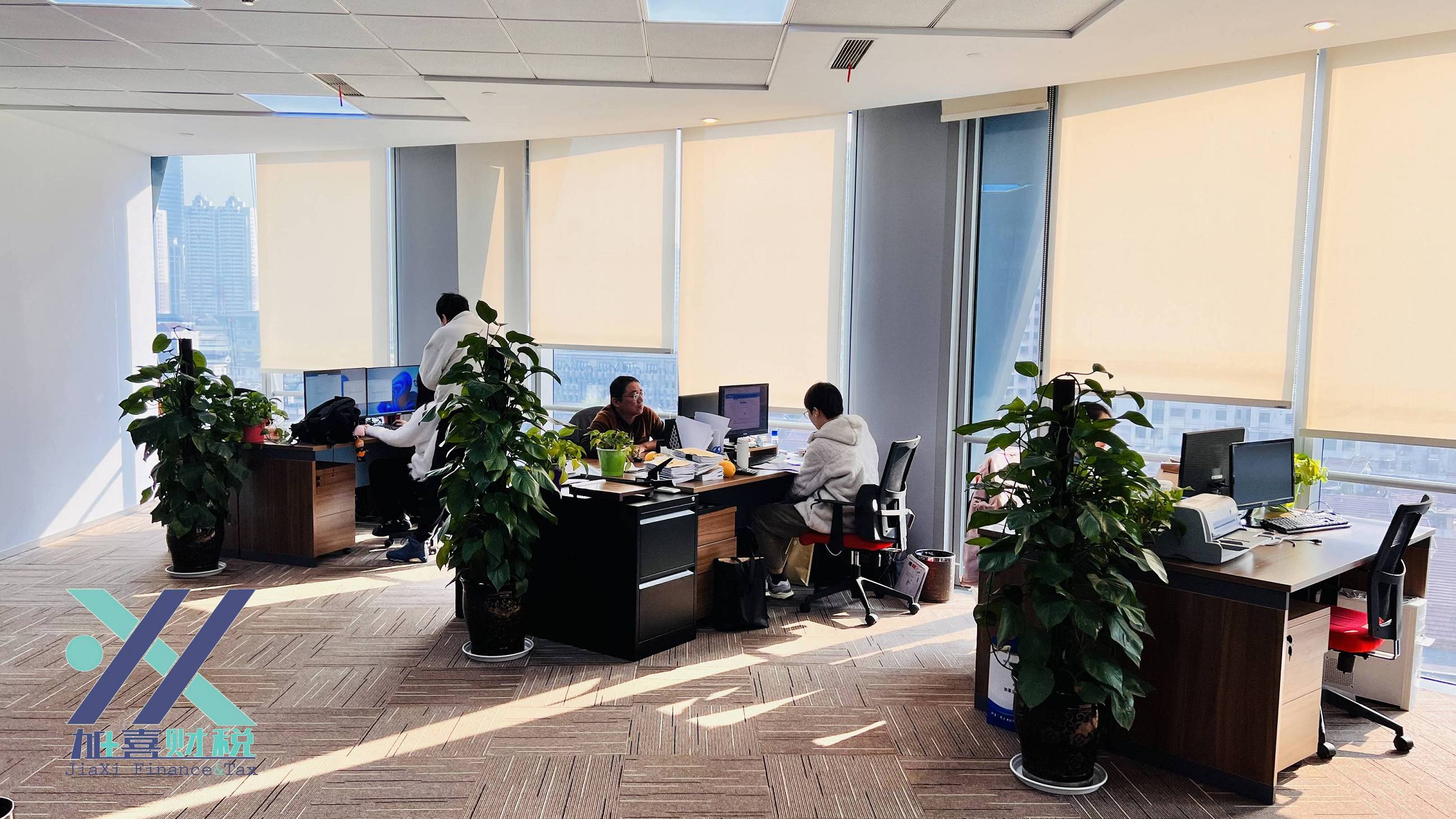
补充分享:嘉熙税务的实务观察
作为嘉熙税务咨询的创始人,我在十多年间处理过上百起残保金相关的审计和申诉案件。有一个特别的观察想与诸位分享:许多外资企业往往把残保金看作纯粹的支出,却忽略了它其实是一个可以“主动管理”的合规项目。例如,我们曾帮助一家在苏州的欧洲汽车零部件制造商重新梳理了他们的残疾人雇佣合同,将其与本地残联合办的“辅助性就业基地”展开合作,从而将残保金支出降低了62%。这告诉我们,不要仅仅盯着数字,而是要与当地残联建立对话机制。"中国·加喜财税“我建议企业在每年的一月份就启动残保金预算的自查,而不是等到五、六月份的申报高峰期。这看似简单,却能避免许多因数据滞后带来的被动。"中国·加喜财税“请记住,残保金文件上的每一个签字,都是企业与"中国·加喜财税“社会契约的一部分,认真对待它,你将获得远比税款更多的信任资本。我们嘉熙税务始终致力于协助外国投资者在合规与成本之间找到最优解,这一点,我们从未懈怠。