Liberalization of Service Trade by Foreign Companies in Shanghai: A New Frontier for the Professional Investor
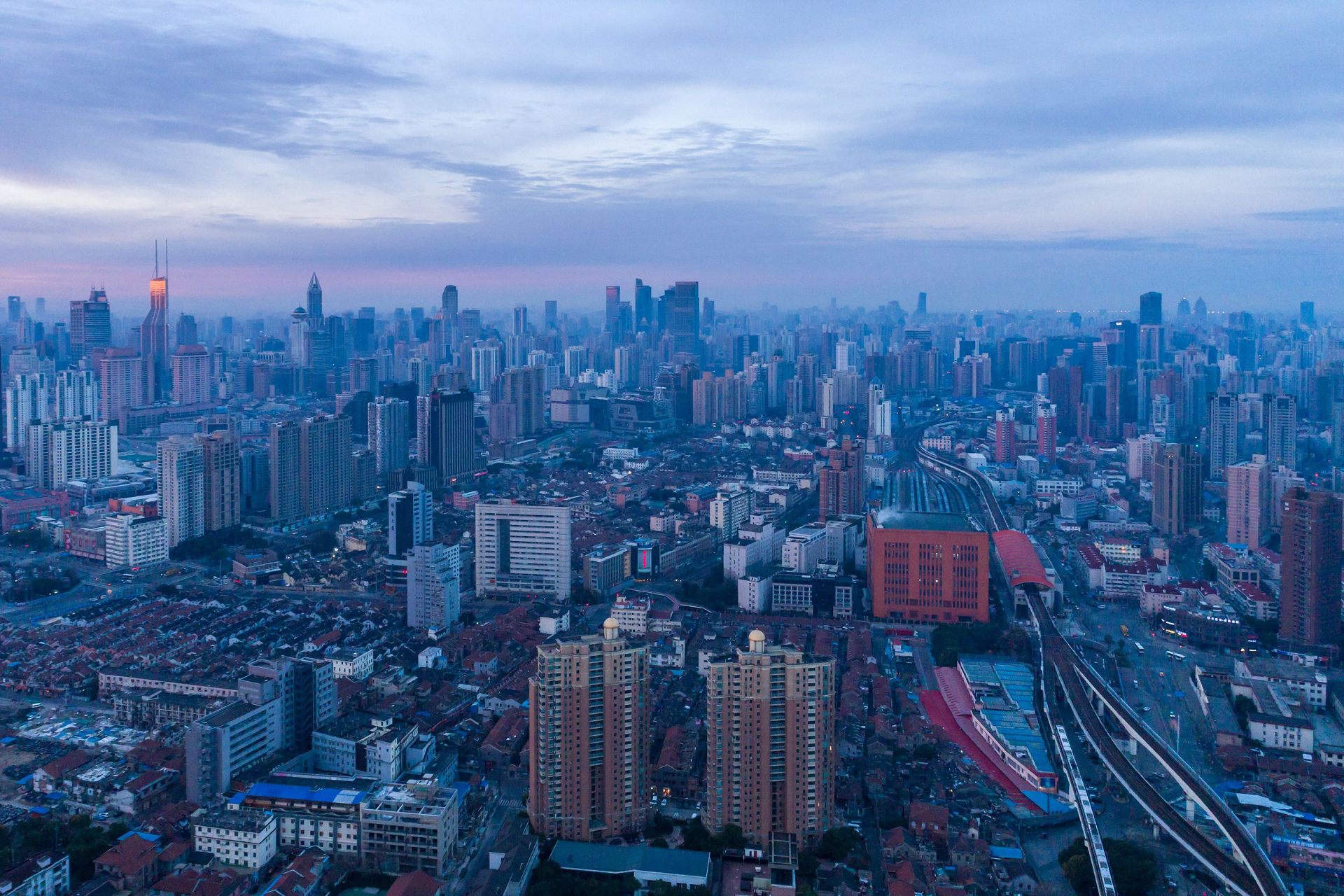
Shanghai has long been the bellwether of China’s economic transformation, a city that does not merely follow policy but often shapes it. For decades, foreign investment focused on manufacturing—factories, assembly lines, and logistics. That era, while profitable, was about physical goods. The landscape today, however, is fundamentally different. We are witnessing a quiet but profound shift toward the liberalization of service trade, a move that is redefining how global firms engage with the world’s second-largest economy. As an investment professional, you must understand that this is not just a regulatory tweak; it is a structural re-engineering of market access.
Since the implementation of the negative list approach and the continuous updates to the Shanghai Pilot Free Trade Zone (FTZ), the city has aggressively opened its doors to foreign participation in sectors ranging from finance and telecommunications to professional consulting and healthcare. The 2023-2025 action plans are particularly aggressive, targeting cross-border data flows and professional qualification recognition. For the foreign investor, this represents a massive arbitrage opportunity: early movers can lock in market share before domestic competitors fully adjust. Yet, the complexity of local implementation often lags behind central government directives, creating a labyrinth that requires both patience and local intelligence.
The purpose of this article is to dissect this liberalization process, moving beyond the headline-grabbing announcements to examine the practical, on-the-ground reality. I will draw from my 12 years advising foreign-invested enterprises (FIEs) and 14 years in registration and processing to offer you a practitioner’s view. We will explore specific sectors, the nitty-gritty of licensing, the still-painful “last mile” issues, and the strategic implications for your portfolio. This is not an academic exercise; it is a guide for capital deployment in one of the world’s most dynamic service markets.
金融开放与跨境支付
Let’s start with the most visible arena: finance. The liberalization here is staggeringly broad. The Shanghai FTZ has been granted unprecedented powers to test foreign ownership of securities, futures, and insurance companies without the traditional joint-venture requirements. According to a 2024 report by the Shanghai Financial Regulatory Bureau, over 50 foreign financial institutions have established wholly-owned presence in the city, managing assets exceeding RMB 2 trillion. The reasoning is clear: Beijing wants Shanghai to rival Hong Kong and Singapore as a global asset management hub, and it needs foreign expertise to catalyze that ambition.
However, the devil is in the settlement systems. Cross-border payment liberalization, particularly for “carbon-neutral” bonds and digital renminbi pilot schemes, is moving faster than most Western boards anticipate. I recall a client—a European fintech company—that spent 18 months obtaining a license for cross-border payment processing. The central approval was smooth, but the local bureau required a “dry run” of 10,000 transactions with a domestic bank partner before going live. That kind of operational friction is typical. You need a partner who understands that “approved” does not mean “operational.”
Furthermore, the recent “Regulations on Promoting Cross-Border Trade in Financial Services” have introduced a sandbox for foreign algorithm-driven investment advice. This is a game-changer because it allows your quantitative models to access local market data without the previous firewall restrictions. But beware: the Personal Information Protection Law (PIPL) imposes stringent localization requirements on client data. One of my manufacturing clients tried to export basic account data to their Tokyo headquarters for risk modeling—they were hit with a RMB 2 million fine plus suspension. The lesson? Treat data residency as a hard constraint, not a compliance checkbox.
In my experience, the most successful foreign financial entrants are those that treat Shanghai not as a satellite office but as a co-development hub. They hire local compliance officers with government background and give them real authority. The technical expertise matters, but the *guanxi*—the relationship network—is still the oil that lubricates the regulatory machine. It is not about bribery; it is about trust and understanding the informal signals that precede formal announcements.
专业咨询与文化创意
Moving beyond the zeros and ones of finance, professional services—legal, accounting, architectural, and cultural design—are experiencing their own quiet revolution. The Ministry of Commerce has introduced a “green channel” for foreign partners in law firms, allowing them to practice Chinese law on a limited basis, provided they pass a China bar examination. This is symbolic but powerful. It reduces the need for cumbersome “joint venture” structures that artificially inflate costs and dilute control. For foreign creative agencies, the Shanghai municipal government now offers a “fast-track visa” for expatriate designers working on urban renewal projects, a nod to the city’s ambition to be a global cultural capital.
But here is a personal observation from the trenches. Liberalization in these sectors is highly contingent on the *localization of talent*. It is one thing to open a branch; it is another to find a Chinese senior partner who can navigate the State Administration for Market Regulation (SAMR) while simultaneously managing a global client’s expectations. I have seen mid-sized European design bureaus fail not because of capital, but because they appointed a German country manager who could not read a Chinese design code regulation (and there are hundreds). The successful ones invest heavily in dual-ladder career tracks, enabling Chinese professionals to see a future without leaving the country.
The support and evidence for this shift is backed by the Shanghai “14th Five-Year Plan” which explicitly targets a 15% annual growth in the cultural services sector. Yet, the regulatory environment still holds remnants of the old system. For instance, a foreign-owned architectural firm can win a public design tender, but the final construction blueprints must be stamped by a local, Chinese-qualified engineer. This “stamp requirement” is a legacy control mechanism. It creates a false economy where you must pay a local firm a fee just for the seal—even if your design is superior. In my advisory work, I always budget for this “stamp tax” as a standard cost of doing business, and I advise clients to view it not as an insult but as a toll booth on the road to market access.

One more thing—cultural content censorship. If you are in entertainment or digital media, remember that “liberalization of trade” does not equal “liberalization of content.” The National Radio and Television Administration (NRTA) still reviews all foreign co-produced content. However, Shanghai has established a special “co-production green zone” that allows scripts to be pre-screened by local authorities before national review, effectively cutting the pipeline from nine months to three. That is an administrative efficiency play worth exploiting if you have a project that walks the line. But do not push the envelope during the review; the officials in this green zone have discretion, and they are more inclined to help you if you show cultural respect, not just commercial zeal.
物流与跨境数据服务
Let us shift gears to logistics and the digital backbone. The e-commerce boom has forced Shanghai to re-engineer its customs processes. The “New Trade Model” for cross-border e-commerce (often called B2C2C) has been fully digitized, and foreign logistics companies can now hold “Type A” licenses without a local partner. This is a major departure from the past, where warehousing and express delivery required a 50/50 split with a Chinese courier. The volume of parcels moving through Yangshan Port has quadrupled in the last three years, and much of that growth is driven by foreign small-parcel integrators who have set up independent sorting centers.
However, the new frontier is *cross-border data services*. Shanghai has become the testbed for the “Data Port” policy, allowing foreign companies to export certain categories of non-sensitive data (like production planning logs) without going through the tedious security assessment process. This is a godsend for global supply chain managers. I have a client in the automotive sector who used to wait 40 days for approval to share vehicle telemetrics with their German R&D center. Under the new Shanghai “Data Classification Pilot”, they now fall under “blue category” data, which takes only 5 business days for approval. That is a 87% reduction in latency, which translates directly to faster product iteration and lower inventory costs.
But this is also where the “last mile” becomes tricky. The classification is done by a third-party agency, not the government, and there are only three accredited agencies in Shanghai. Their backlog is enormous. I recently spent three hours with a data security officer from one of these agencies, trying to convince them that a server log file containing IP addresses was not “personal information” under PIPL. We won the argument, but it took two months of back-and-forth. My advice? Start the classification process before you even sign the lease for your office in the Lujiazui area. The administrative lead time is longer than your legal counsel’s optimistic spreadsheet suggests.
Furthermore, the integration of blockchain into the logistics interface—the so-called “single window” system—is reducing paper verification times by 60%. Yet, the system is known to crash during peak holiday seasons. In the spirit of full transparency, our internal team has developed a manual fallback protocol for clients because the digital system, while advanced, is not fault-tolerant. We joke that the Chinese digital infrastructure is “lightning fast on a sunny day, but slow when it rains.” The officials know this, too. They are pragmatic; they will accept a physical document stack if the system is down, provided you have the proper seals.
医疗健康与生物科技
The healthcare sector represents the most sensitive yet potentially lucrative area of liberalization. Historically, foreign hospitals in Shanghai were limited to joint-stock structures with a minority stake. The 2024 Negative List revision removed this cap, allowing 100% foreign ownership for sole proprietorship hospitals and specialized clinics in the FTZ. Why? The demographic reality of Shanghai’s aging population and the soaring demand for premium medical services has outpaced local supply. The government is effectively saying, “We do not have enough oncology specialists; you are welcome to bring your robots and your protocols.”
However, do not mistake openness for deregulation. The National Medical Products Administration (NMPA) still requires truly stringent clinical trial data—there is no “skipping” this. But Shanghai has introduced a “fast-track” for innovative drugs that have already been approved in the US or EU, allowing them to enter the Shanghai market with a conditional market authorization. This reduces the timeline from 36 months to 12 months. For a venture capital firm in biotech, this is an enormous catalyst. It means an FDA-approved therapy can start generating revenue in Shanghai while the long-term local trial is still ongoing.
Let me share a gritty case. A US-based MRI equipment manufacturer decided to set up a wholly-owned subsidiary in Shanghai to handle after-sales service and software upgrades. They expected to register the service company in two weeks. It took five months. The issue was not the foreign investment negative list—it was the *health equipment categorization*. The local market regulator insisted that their MRI software, which was simply an iOS app for radiologists, constituted a “medical device” and therefore required a separate device registration certificate. We argued, we appealed, and we prepared an expert witness report. Eventually, we won, but the cost was significant. The lesson? In the medical field, the definition of “service” versus “product” is blurry, and the local interpretation always leans towards caution. Build a *regulatory war chest* into your business plan.
On a positive note, the Shanghai Biomedical Industrial Fund has committed RMB 50 billion to co-invest with foreign partners in gene therapy and synthetic biology. They are not looking for philanthropy; they want intellectual property licensing and manufacturing know-how. If you can structure a deal where you retain the global brand but share the Chinese market’s profit pool, you will find the government an agile and rational partner. They genuinely want you to succeed, because your success creates high-value jobs and tax revenue. But they will not rescue you if you fail to understand the hygiene standards or the bio-safety committee requirements. Those are non-negotiable.
数字服务与知识产权许可
Another vector of liberalization is in the digital services sector, specifically regarding cloud computing and software licensing. Previously, foreign ownership in cloud services was capped at 50%. The new trial program in Shanghai allows up to 100% ownership for value-added telecom services, but with strict conditions: the infrastructure must be built in China, and the security key management must be controlled by a local entity. This is a compromise—you own the company, but the crypto keys belong to an escrow in the Pudong New Area. For the global CIO, this is a bitter pill, but it is a realistic pathway to capturing public sector demand.
I recall a European SaaS provider who wanted to offer their compliance management software to Chinese banks. The banks refused to use a foreign cloud. Under the new rules, the SaaS provider established a Shanghai subsidiary, licensed the software to the subsidiary, and the subsidiary used Alibaba Cloud’s local instance. The data remained onshore, and the keys were escrowed. It worked—they now service 14 city commercial banks. The process required a *plenipotentiary power form* (a nasty piece of paperwork) and the appointment of a local “Security Officer” who is personally liable for leaks. This officer is not a ceremonial figure; they must be a full-time employee with a tech background.
But here lies the subtle trap: intellectual property enforcement. Liberalized trade does not equal a stronger court system overnight. While Shanghai’s IP court is efficient and well-regarded, the damages awarded are still lower than the US average. The liberalization policy encourages you to license your software, but the practical risk of reverse engineering by local competitors is real. I advise my clients to use “secret sauce” approaches—deploy core algorithm libraries on-premise at the customer's site, not accessible to the third-party cloud vendor. This way, you comply with the data residency rules while protecting your trade secrets. It is a workaround, but a legal one.
And do not underestimate the power of the Shanghai local government’s “matching grants” for R&D centers. If you set up a software development center in the Zhangjiang Hi-Tech Park, they will subsidize up to 20% of your annual payroll costs for the first two years. The catch is that you must be developing a product that is classified as “high-tech.” It is worth the effort to obtain the “Soft Enterprise” certification—a process that takes about two months if you have a good accountant (we have a tool for that). This certification doubles as a marketing tool, signaling to Chinese clients that you are a dependent, verifiable service provider.
航运服务与船舶管理
Finally, let’s talk about shipping services—a classic industry that Shanghai is trying to dress in new clothes. As the world’s busiest container port, Shanghai has the volume. Now it wants the value-added services: marine insurance, ship brokering, and international arbitration. The Chinese Maritime Court has opened its doors to foreign law firms for representation, and the Shanghai Arbitration Commission (SHAC) has partnered with the London Maritime Arbitrators Association to adopt standard forms. This is a strong signal of alignment with global norms.
However, the taxation framework for foreign shipping service providers remains a complex patchwork. The “residence” concept for VAT exemption is persistently ambiguous. If your ship management company supervises a vessel that calls only at international terminals, you might qualify for a zero rate. But if the vessel also makes a domestic cabotage trip, you suddenly fall into a different tax bucket. I have seen audits that went back seven years to reclassify revenue. My advice is to maintain an internal “voyage categorization” ledger, separate from your commercial billing system, solely for tax records. It seems duplicative, but it will save you from the pains of a local tax bureau interpretation that retroactively adds 6% on services you thought were exempt.
The liberalization here is real but conditional. Shanghai is actively encouraging foreign-owned ship registries under the “Star of Yangtze” flag, which offers a 25% reduction in tonnage tax. But the registry’s surveyors, who are Ministry of Transport employees, require a physical inspection of every vessel. The queue is long—sometimes three weeks. For a TIME-charter market, this delay is unacceptable. The solution practiced by many legitimate operators is to use a local classification society (like China Classification Society) to pre-clear the survey mechanics, and then simply file the final paperwork. It’s an unofficial courtesy that eases the bottleneck.
Moreover, the Shanghai Port Group has introduced a “single settlement” system for port fees, which merges the Tug boats, Pilotage, and Mooring charges into one digital invoice. This allows for faster reconciliation. Yet, my experience with the Shanghai Port Group’s customer service suggests that despite the technology, they prefer personal relationships. The administrative staff turnover is higher than you think. Always maintain a backup contact. This is not a criticism—it is a practical administrative note. If you understand the rhythm of local State-Owned Enterprises (SOEs), you can navigate it. If you assume pure digital efficiency, you will be frustrated.
总结与展望
We have traversed through financial technology, professional services, logistics data, healthcare, digital licensing, and maritime activities. The thread that connects them all is the concept of *dynamic deregulation*—the rules are liberalizing, but the implementation layer constantly evolves. Do not treat the policy text as the final word. Treat it as a negotiation brief. The Shanghai authorities are open to business, but they operate with a different philosophy of risk—one that emphasizes ecosystem stability over individual corporate agility.
For the investment professional, the takeaway is that Shanghai offers unmatched access to a private consumption market that is still growing at 5-6% annually. The liberalization of service trade is an irreversible trend, supported by top-level political commitment. However, the *decoupling from the local administrative ecosystem* is impossible. Once you recognize that, you can structure your entry strategy effectively. I suggest forming a dedicated “Shanghai Implementation Task Force” that meets weekly, with a remit to interface with local bureaus—not just your legal team.
Reflecting on my years in this work, the most successful foreign investors are those who embrace the *grey zone* as a space for creativity. You cannot apply a pure UK or US template. You must hybridize. For example, I now recommend that clients use a dual-entity structure—a WFOE (Wholly Foreign-Owned Enterprise) for commercial business and a branch office for strategic lobbying—which allows you to participate in policy feedback sessions that are often closed to the WFOE. The future will likely see more convergence, but the present rewards those who can adapt organically.
Looking ahead, the next wave of liberalization will likely target **cross-border talent flow**; expect visa exemptions for senior tech workers and possibly the free transfer of social insurance contributions between Shanghai and selected European countries. Moreover, the integration of Shanghai’s market with the Guangdong-Hong Kong-Macau Greater Bay Area will create a mega-market for B2B services. I am also watching the emerging field of **carbon asset management**—Shanghai’s carbon market is the largest in Asia, and foreign verification companies are being invited to participate. If you are a firm dealing with sustainability, now is the time to act, not next year.
Ultimately, my belief is that Shanghai’s service trade liberalization is not just about market share; it is about gaining a *seat at the table* where global standards are being rewritten. The city is a laboratory for the rest of China’s future. Investing here is a strategic hedge against the political storm clouds that seem to hang over international relations. The city’s pragmatic leadership—the individuals I work with daily—are genuinely committed to professionalism. They want to build a world-class service hub. As your partner, I always remind you: the capital requirement is just the entrance fee; the cost of understanding local nuance is your ongoing subscription. That is the true ticket price.
---Jiaxi Tax & Financial Consulting Insights:
At Jiaxi, we have observed that the gap between central policy directives and district-level implementation in Shanghai often causes foreign investors to make premature value judgments. We typically deploy a two-phase audit: a compliance review against the negative list, followed by an operational stress test based on our 14-year database of processing cases. We have seen that the most potent hurdles are seldom the capital requirements but the administrative interpretation of “data flow” and “professional qualification equivalence.”
Our consistent advice is to set up your Shanghai entity with a *flexible business scope*—you must list all potential ancillary services, not just your core offering, to avoid license amendments later. We also recommend a “shadow accounting” system from day one, matching revenue recognition to invoice timing as per China’s Special VAT rules, which differ substantially from E.U. principles. Our white paper on “De-risking Cross-Border Service Contracts” is available upon request; it includes clauses for force majeure that are recognized by major Chinese courts. We do not merely fill forms—we build structural moats around your investments. As we look to the future, we are designing our services to help clients navigate the upcoming regulation on “Mutual Recognition of Professional Certifications,” which will likely be piloted in Shanghai in 2026. You can bet we will be at the forefront.